A Spring Update

Another wet winter, and what looks to be another dry spring. The weather for ‘26, thus far, has been worryingly identical to the weather of ‘25. That’s a good enough place from which to depart on a spring update.
The winter crops were battered by rain. They’ve fared surprisingly well, all things considered. On the organic land, there’s probably about an acre that got lost to flooding. This could have been a lot worse.
Over the winter, about two thirds of the land was planted as a lay, without growing a crop for harvest. This was a mixture of clovers, grasses, phacelia, turnips, vetches, radishes, and a whole bunch of arable weeds. This is grown to rest the soil, and to feed the soil life whilst it’s resting. The clovers will fix nitrogen all the while that it’s warm enough, and the diversity of plants will feed a diversity of soil life..
Sheep came to graze the lay for a little over a month, from one of the last few weeks in February, to Easter Monday. Now that I think about it, they spent nearly the entire period of Lent on the farm, which is amusing. I wander what they gave up. Their job was to recycle nutrients, turning plants into piss and shit, which they managed in abundance.
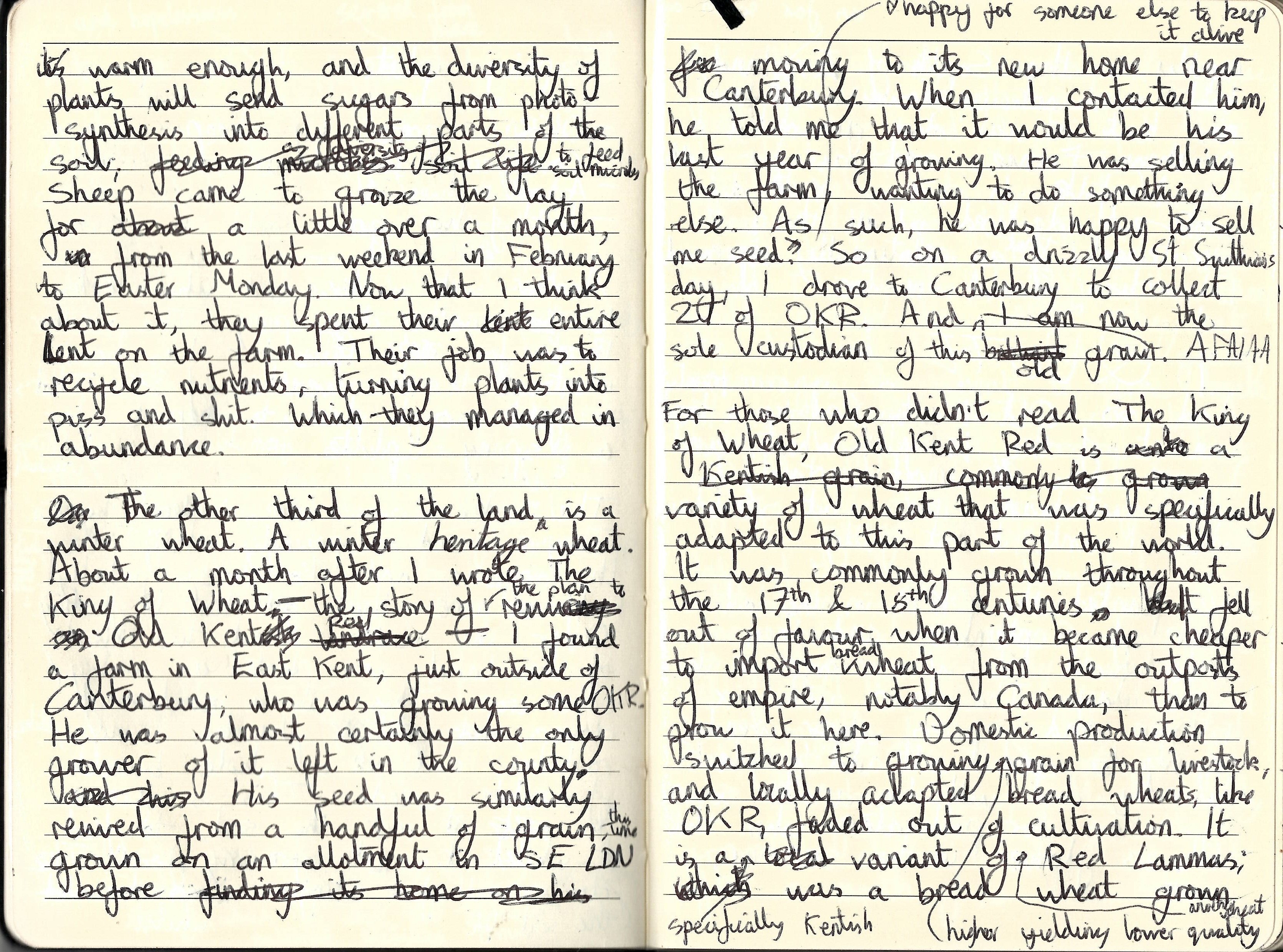
The other third of the land is growing a winter wheat. A heritage winter wheat. About a month after I wrote The King of Wheat — the story of my plan to revive an old Kentish landrace, named Old Kent Red — I found a farmer in East Kent, just outside of Canterbury, who was growing some it. He was almost certainly the only grower of it left in the county. His wheat was similarly revived from a handful of grain, this time grown in an allotment in south-east London, before moving to its new home near Canterbury.
When I contacted him, he told me that this would be his last growing year. He was selling the farm, wanting to do something else. As such, he was happy to sell me seed, happy for someone else to keep the variety alive. So on a wet St Swithin’s day, I drove to his farm to collect two tonnes of Old Kent Red. And, as far as I am aware, I am now the sole custodian of this old grain.
For those who didn’t read The King of Wheat, Old Kent Red is a landrace, specifically adapted to this part of the world. It was commonly grown throughout the 17th and 18th centuries. It fell out of favour when it became cheaper to import bread wheat from the outposts of empire, notably Canada, than to grow it here. Domestic production shifted towards growing higher yielding, lower quality grains for livestock, and locally adapted bread wheats faded out of cultivation.
Specifically, Old Kent Red is a locally adapted variant of Red Lammas. This was a bread wheat grown mostly in the south of England, but it was also known as far south as northern France, and as far north as Norfolk. In 1774, William Ellis, with all of the excitement that an emotionally repressed Gentlemen of Science could muster, declared:
Red Lammas. As Wheat is the King of Grain, so this Sort has been deemed, hitherto, The King of Wheats!
And so Old Kent Red is the Kentish variant of the King of Wheat, and I am now almost certainly its sole custodian. It’s a bit overwhelming when I write it out fully.
We planted the Old Kent Red in the last week of September, and undersowed it with clover on the same day. The clover will fix nitrogen and supress weeds; it will add to the plant diversity, and will be another source of nectar for the pollinators when the clovers flower in the summer.
After drilling, we had about 400kg of seed left over. With Gilchesters’ help, we milled it, and sent it as a taster to a few London bakeries — to whet the whistles for the season to come, if you will. Everyone seems to be really excited to work with it. The King of Wheat, making its long awaited return, coming to a bakery near you!
As I am slowly learning with organic farming, less is often more. After drilling, I’ve stood back, and let the plant get on with it. The only intervention was to graze it with the sheep. It’s an old trick, common back when all farms were mixed. During the winter months, sheep would graze the cereal crops. They eat the diseased leaves, and the grazing encourages the cereal to grow back with more vigour. A bit of tough love. This can be overdone, one can overgraze the wheat, but I think we got the balance right. Since they were moved off the wheat, it has bounced back into life.
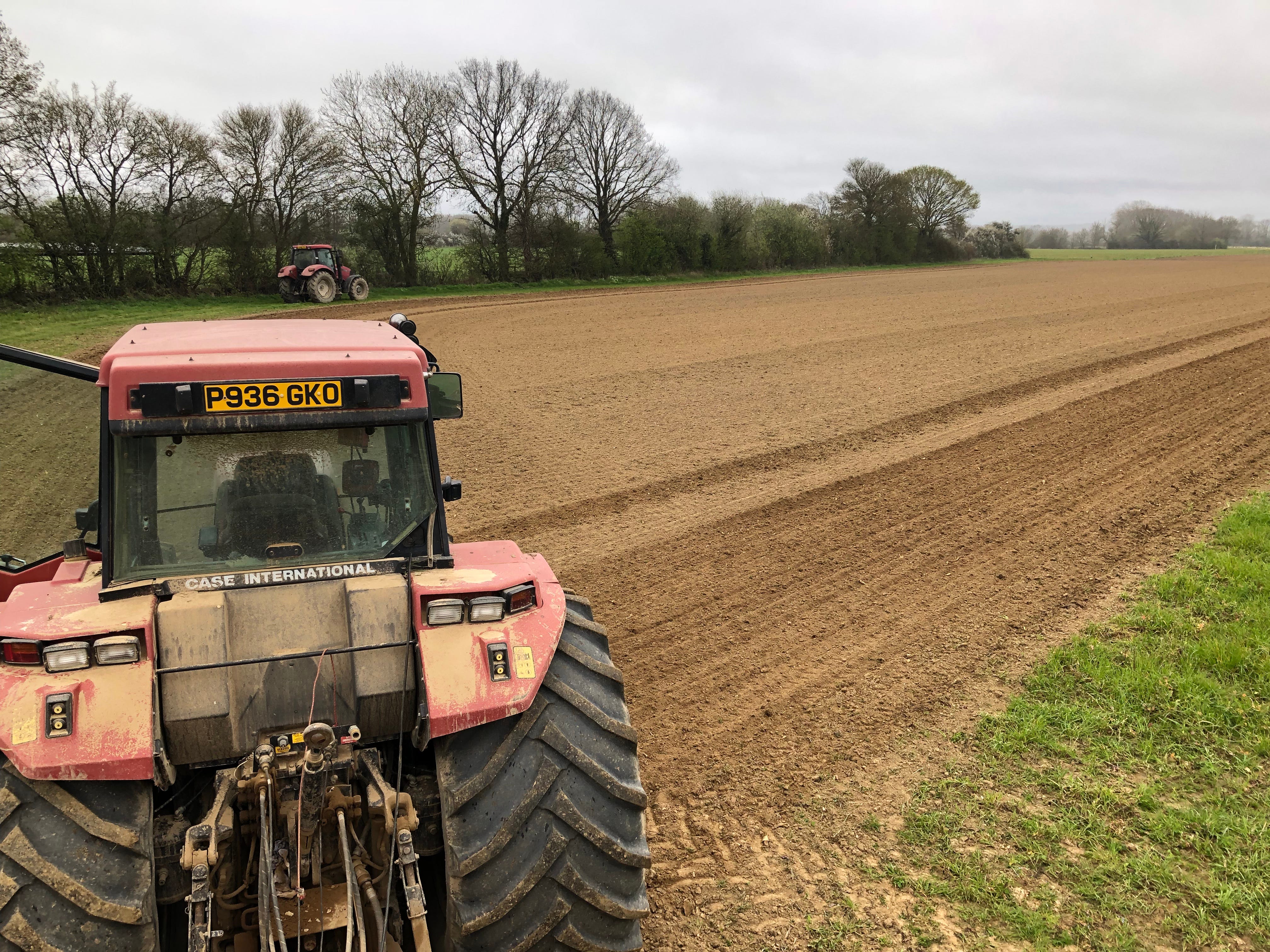
Half of the lay was terminated by cultivation, so that we could plant some spring wheat. The ground came up nicely, good drilling conditions. We planted a mixture of wheat and beans on the first Saturday in April. All beans are part of the legume family, so they also fix atmospheric nitrogen. As they die in the summer, they will dump a load of nitrogen into the soil, just when the wheat is hungriest. Hopefully, this will make it more likely that the wheat is a good enough quality to be used for bread flour.
And, just like last year, we’ve had no rain since the beginning of March. Initially, this was good news, to give the ground a chance to dry up. But after a month-and-a-bit of no rain, and with a lot of thirsty seeds in the ground, I’m back to checking the Met Office frantically, praying and hoping for just a drop of rain. At the start of the week, they promised some for today. Now there might, might, be some on Monday.
The changing climate really is making job harder, in real time. Weather seems to hang over in blocks that are months long. Nothing but rain, then nothing but sun. I suppose the response is to find ways to adapt, trying new methods and ideas. But a bit of rain would still be nice! There aren’t many methods that work without rain!
But the rain will eventually come. When it comes is beyond my control. All that I can hope is that it’s not too late. The thrill of the game.